
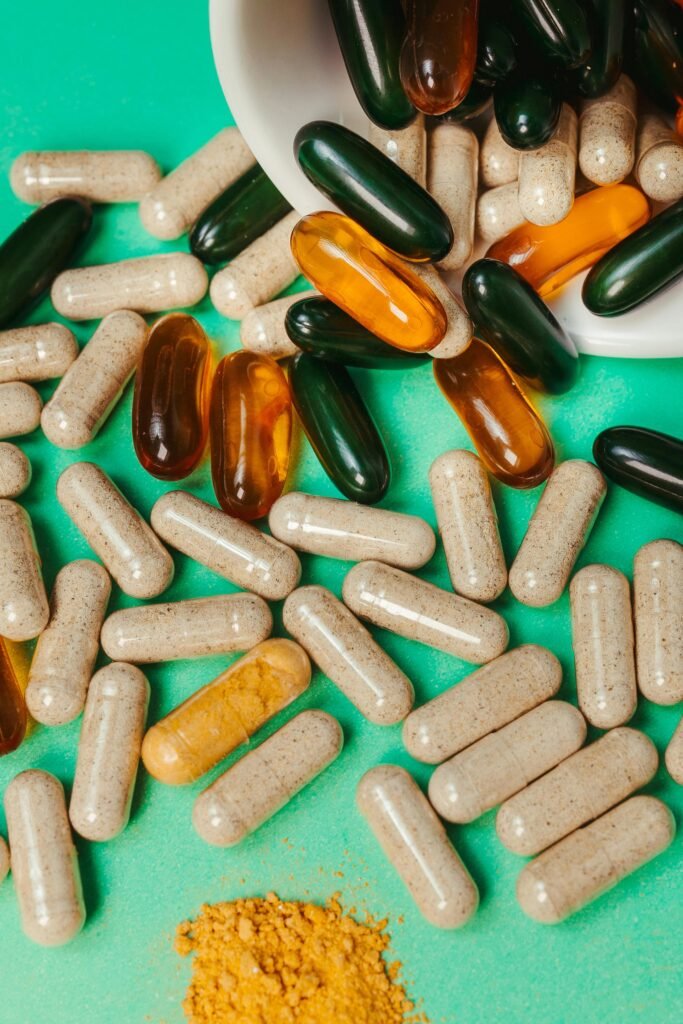
Supplements are a topic full of exaggerated promises. But some have decades of research behind them — and work in the brain in ways most people don’t know about.
Dr. Paulo presents three supplements with real scientific evidence for brain health. They are not miracles. They are building blocks in a larger structure — and must be used with medical guidance.
1. Creatine: not just for muscles
Creatine is probably the most researched supplement in the world — over 71,000 scientific articles. And yet, most people still use it for the wrong reason.
Dr. Paulo is direct: creatine is not a gym supplement. It is a brain supplement that also works in the muscles.
The brain consumes about 20% of all the body’s energy. To function during intense tasks — studying, decision-making, logical reasoning — it uses a system called phosphocreatine, a kind of emergency battery for moments of high mental demand. Part of the creatine ingested crosses the blood-brain barrier and converts into phosphocreatine in neurons, regenerating ATP — the energy currency of brain cells.
When this reserve runs low, you feel mental fog in the middle of the afternoon, thoughts that won’t connect, that sensation of being halfway through a simple task and not being able to finish it. It is not laziness. It is a lack of fuel in the right place.
A review published in the Journal of the International Society of Sports Nutrition in 2025 consolidated decades of research: creatine supplementation in adults over 60 improves lean mass, muscle strength, memory, and attention. A 2024 meta-analysis published in Frontiers in Nutrition brought together 16 randomized clinical trials and directly confirmed the cognitive effects.
A figure Dr. Paulo highlights: 70% of adults over 75 are below the recommended creatine level in their diet. They are not aging faster because of genetics — they are aging faster because of creatine deficiency.
The standard dose is 5g per day. The effect establishes itself within 7 days. Within 30 days the brain reaches a new energy baseline.
2. Omega-3 DHA: the brain’s structural component
DHA is the main structural component of neuronal cell membranes. Without it, membranes become less fluid, synaptic communication worsens, and neuroinflammation increases.
Omega-3 DHA improves synaptic plasticity — the brain’s ability to create new connections. When neuroplasticity increases, memory, learning, and information retention grow progressively. It also reduces neuroinflammation, one of the main factors that accelerates brain aging.
Dr. Paulo recommends regular consumption of omega-3-rich fish (tuna, sardines, salmon) two to three times per week. For those who don’t reach that frequency in their diet, quality omega-3 supplementation is a scientifically supported alternative.
3. L-theanine: balance without sedation
L-theanine is an amino acid found naturally in green tea, and one of the most studied supplements for improving cognitive function without causing drowsiness.
It acts directly on the formation and production of neurotransmitters — especially those linked to focus, motivation, and well-being. It helps the brain stabilize mood, regulates emotions, and promotes alpha-wave brain activity — the state of deep focus and creativity, without the anxiety associated with caffeine.
Many people combine L-theanine with caffeine for exactly this reason: theanine softens the unwanted effects of caffeine while enhancing the state of alertness.
What supplements don’t do
Dr. Paulo is clear on this: supplements do not perform miracles and cannot be used by everyone without assessment. They accelerate processes the brain already performs and replenish what is gradually lost with age — but they are one piece of a larger system, not an isolated solution.
The foundation remains exercise, sleep, nutrition, and social connection. Supplements enhance that system. Without the foundation, they do little.
Always consult your doctor before starting any supplementation.
The information in this post is based on the work of Dr. Paulo Porto de Melo, neurologist and neurosurgeon, trained at Unifesp and with a postgraduate degree from Harvard, with over 25 years of clinical experience.
Follow Dr. Paulo on Instagram: @ppmelo