
The name Ozempic has become a topic of conversation in gyms, doctors’ offices, television programs, and dinner tables. Celebrities have admitted to using it. Doctors debate it. Patients rush to get a prescription. And the pharmaceutical industry has never profited so much from a single drug in the history of modern medicine.
But what exactly is Ozempic? Is it safe? Does it really work? And what happens when you stop taking it?
This article brings together the most current science — publications from the New England Journal of Medicine, JAMA, Nature Metabolism, and research centers such as NIH, UCL, and the University of Cambridge — to answer these questions clearly, honestly, and without exaggeration.
What are GLP-1 medications?
GLP-1 stands for glucagon-like peptide-1. It is a natural hormone produced by your intestine every time you eat.
When GLP-1 is released, it does three important things: it signals the pancreas to produce insulin (which lowers blood sugar), it signals the brain that you are full (reducing hunger), and it slows stomach emptying (making you feel satisfied for longer).
GLP-1 medications — technically called GLP-1 receptor agonists — are synthetic substances that mimic this natural hormone, but in a much more potent and long-lasting way. The main one is semaglutide, which is the active ingredient in both Ozempic and Wegovy.
The difference between the two is simple: Ozempic was originally approved to treat type 2 diabetes. Wegovy contains the same active ingredient but at a higher dose, and was approved specifically for the treatment of obesity.
How were they discovered?
The story begins in an unlikely place: lizard venom.
In the 1980s, scientists studying the Gila monster — a venomous reptile from the American Southwest — discovered that its saliva contained a version of the GLP-1 hormone that was far more stable than the human version, which lasts only a few minutes in the bloodstream.
Decades of research later, Danish pharmaceutical company Novo Nordisk developed semaglutide — a molecule that mimics GLP-1 but lasts an entire week in the body. Ozempic was approved by the FDA in 2017 for type 2 diabetes. Wegovy, at a higher dose, was approved in 2021 for obesity.
What no one expected was the magnitude of the weight loss results — and the cultural phenomenon that followed.
The results: what science really says
The numbers are impressive. A study published in the New England Journal of Medicine — one of the most respected medical journals in the world — showed that people with obesity taking Wegovy lost an average of 15% of their body weight over 68 weeks. For a person weighing 220 lbs, that represents 33 lbs lost.
Newer and more potent versions of the drug went even further. Zepbound (tirzepatide), which acts on two hormonal receptors simultaneously, showed an average weight loss of 22.5% of body weight in clinical studies — the largest result ever recorded for a medication without surgery.
For comparison, traditional diets combined with exercise typically result in 3% to 5% weight loss. Bariatric surgeries reach 25–30%, but with significant surgical risks.
Beyond weight loss, studies showed benefits that surprised even the researchers themselves:
- A study of more than 17,000 people showed that semaglutide reduced the risk of serious heart attacks and strokes by 20%, even in people without diabetes
- Research showed significant improvement in sleep apnea in patients using tirzepatide
- A study of 86,000 adults found 17% lower cancer risk among GLP-1 users
- Results published in 2026 showed that women using these medications had 30% lower risk of breast cancer
- Early research suggests possible protection against Alzheimer’s and dementia, through improved insulin sensitivity in the brain
As The Lancet wrote: “We are facing a new class of medications that could transform the treatment of metabolic diseases in the 21st century.”
How it works in practice: what you feel when taking it
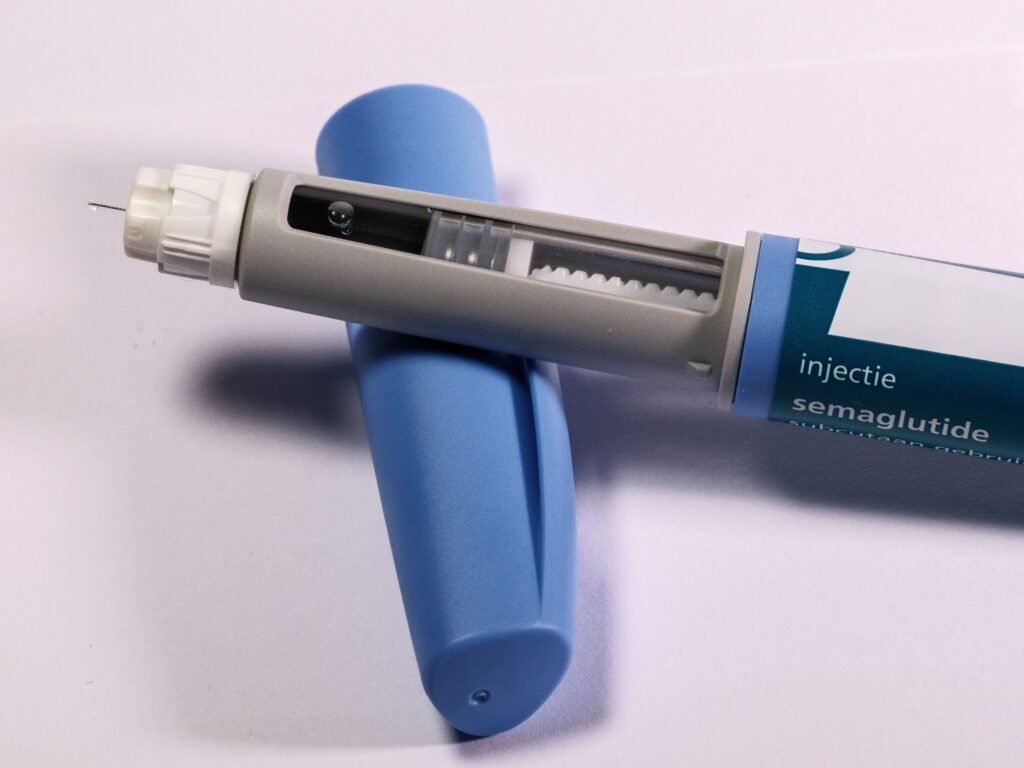
Most GLP-1 medications are administered by weekly injection — a very fine needle applied under the skin of the abdomen, thigh, or arm. Starting in 2026, oral tablet versions have also become available.
The dose starts low and increases gradually over weeks or months, allowing the body to adjust.
What most people report is a profound change in their relationship with food. The constant thoughts about what to eat next — which many people with obesity describe as a continuous “mental noise” — simply disappear. Hunger becomes less urgent. A smaller portion satisfies.
NIH researchers published a study in 2026 in Nature Metabolism that helps explain why: semaglutide acts directly on brain regions that control appetite, altering how neurons respond to hunger signals. It is a neurological action, not merely metabolic.
Side effects: what you need to know
No powerful medication comes without risks, and GLP-1 drugs are no exception.
The most common side effects are gastrointestinal: nausea, diarrhea, constipation, abdominal pain, and vomiting. They affect between 15% and 44% of users, depending on the medication and dose, and tend to be most intense at the start or after dose increases. In most cases, they improve over time.
Rare but serious effects include:
- Pancreatitis — inflammation of the pancreas
- Kidney problems — especially in people with pre-existing kidney disease
- Gallbladder problems — gallstones
- NAION — a rare condition that can cause sudden vision loss, described in studies published in JAMA Ophthalmology
- Possible thyroid tumor risk — observed in animal studies, not yet confirmed in humans, but included in the drug label as a warning
In 2026, a study presented at the Endocrine Society’s annual meeting brought an unexpected finding: people who lost weight with GLP-1 medications became significantly less physically active — the opposite of what was expected. Researchers warn that since the medications also reduce lean muscle mass, physical exercise is essential for anyone using these drugs.
Researchers from UCL and the University of Cambridge published an important warning in Obesity Reviews: many users are not receiving adequate nutritional guidance, which increases the risk of vitamin and mineral deficiencies and muscle loss.
The big debate: what happens when you stop?
This is the most controversial question — and the most honest one any doctor needs to answer before prescribing.
Multiple studies show that when people stop taking GLP-1 medications, most regain the weight they lost — in many cases within less than a year. This happens because the medication is artificially suppressing appetite. When the pharmacological effect ends, the body returns to its previous state.
This raises a fundamental question: are these medications a long-term treatment, possibly lifelong? And if so, what is the cost — financial, physical, and emotional — of maintaining them indefinitely?
Cost is a real problem. In the United States, Wegovy costs around $1,300 per month without insurance. The values are equally prohibitive in many parts of the world.
The medical community is divided. One camp argues that obesity is a chronic disease, like hypertension, and that continuous medication is legitimate. Another camp warns that using these medications without real lifestyle changes is a shortcut that does not address the root cause of the problem.
Who are these medications indicated for?
It is essential to be clear: Ozempic and Wegovy are not indicated for anyone who simply wants to lose weight. They are medications with precise medical indications.
Wegovy is indicated for:
- Adults with a BMI of 30 or higher (obesity)
- Adults with a BMI of 27 or higher (overweight) who have at least one weight-related condition, such as type 2 diabetes, hypertension, or cardiovascular disease
- Children aged 12 and older with obesity (subject to rigorous medical evaluation)
Ozempic is primarily indicated for type 2 diabetes — its use for weight loss outside that indication is considered “off-label” and must be evaluated case by case by the physician.
What does genetics have to do with it?
Research published in 2026 in Genome Medicine brought an important discovery: approximately 10% of people carry genetic variations that make GLP-1 medications work much less effectively — or barely at all.
This explains why some people lose 20% of their weight while others barely lose 3%. The response to the medication is not uniform, and researchers are already working on genetic tests that could predict individual response before starting treatment.
🌍 How much does it cost? The price shock around the world
This is one of the most controversial questions surrounding GLP-1 medications — and a scandal that reached the U.S. Senate. The price of the same medication varies dramatically depending on where you live.
| Country | Ozempic / month | Wegovy / month |
|---|---|---|
| 🇺🇸 United States | $349–$969 | $349–$1,349 |
| 🇩🇪 Germany | ~$59 | ~€300 (private) |
| 🇫🇷 France | ~$71 | Not reimbursed |
| 🇬🇧 United Kingdom | NHS covered (diabetes) | £95–£206 (private) |
| 🇩🇰 Denmark | ~$122 | ~$343 |
| 🇧🇷 Brazil | R$ 1,200–1,800/mo | R$ 1,500–2,200/mo |
To illustrate the disparity: Ozempic costs $969 in the U.S. and just $59 in Germany — the same medication, from the same company, with the same formula.
The good news for those in the U.S.: following a deal with the Trump administration in 2026, Novo Nordisk began offering Wegovy and Ozempic for $349 per month to cash payers, available through the official websites and partners like GoodRx and Costco.
And for Brazil, there is important news: semaglutide’s patent expired in March 2026. Brazil’s health regulator Anvisa has already approved the first national generic, Ozivy, by EMS. With the arrival of generic versions, experts estimate prices could fall by 50% to 60% — potentially bringing Wegovy down to around R$ 680–850 per month. The first generics are expected to reach pharmacies between late 2026 and early 2027.
💉 How is it taken in practice?
For those who have never used it, the idea of self-injecting may seem daunting. In practice, it is far simpler than it sounds.
How the injection works:
- The pen comes pre-loaded with the medication — no preparation required
- The needle is extremely thin — most people describe it as an almost imperceptible pinch
- Applied once a week, always on the same day
- Recommended injection sites: abdomen, thigh, or back of the upper arm
- The dose starts low and increases gradually every 4 weeks as the body adjusts
- Starting in 2026, oral tablet versions are also available for some medications
As for medical appointments: follow-up is essential. Most doctors schedule monthly consultations at the start of treatment, then shift to every 3 months. Periodic blood tests are also recommended to monitor kidney function, pancreatic health, and other markers.
📋 Ozempic, Wegovy, Mounjaro, Zepbound — what is the difference?
With so many names circulating, it is easy to get confused. Here is a simple breakdown:
| Brand name | Active ingredient | Indicated for | Average weight loss |
|---|---|---|---|
| Ozempic | Semaglutide | Type 2 diabetes | ~10–15% |
| Wegovy | Semaglutide (higher dose) | Obesity | ~15–20% |
| Mounjaro | Tirzepatide | Type 2 diabetes | ~15–20% |
| Zepbound | Tirzepatide (higher dose) | Obesity | ~22% |
The main difference between Ozempic/Wegovy and Mounjaro/Zepbound is that the former act on only one hormonal receptor (GLP-1), while the latter act on two receptors simultaneously (GLP-1 and GIP) — hence the more impressive weight loss results of Zepbound.
🚨 Do you need a prescription? And what about counterfeit versions?
⚠️ WARNING — Read this before buying anything online
Yes, all of these medications require a prescription — in the U.S., Europe, and most countries worldwide. There is no legal way to obtain them without a prescription from a licensed physician.
The problem is that explosive demand has created a parallel market of counterfeit and adulterated versions, especially through unregulated online stores. The FDA has already issued official warnings about fake medications circulating under the names Ozempic and Wegovy.
The risks of using counterfeit versions include:
- Absence of the active ingredient — you pay a high price for a saline injection
- Contamination with unknown substances
- Incorrect dosage — both too high and too low
- Lack of quality control in the manufacturing process
Golden rule: if you find these medications being sold without a prescription, at prices far below market value, or on websites with no clear origin — walk away. The health risks are real and well-documented.
The discovery no one expected: the effect on addiction
This is probably the most surprising — and potentially most revolutionary — discovery involving GLP-1 medications in 2026.
Patients who started taking Ozempic to lose weight began reporting something strange to their doctors: the desire to drink alcohol simply diminished. Others stopped smoking without even trying. Some reported that the compulsive urge to eat junk food, gamble online, or make impulsive purchases also faded.
At first, it seemed like coincidence. But the data kept accumulating.
A study of nearly 600,000 patients with diabetes found that those treated with semaglutide had between 50% and 56% lower risk of developing or relapsing into alcohol use disorder compared to those taking other medications for the same condition. The data were published in Nature Communications.
An analysis of medical records of 33,000 people published in 2024 showed that patients using Ozempic had one-third to one-half lower risk of opioid overdose compared to patients on other diabetes treatments.
A Phase 2 clinical trial published in JAMA Psychiatry — with people diagnosed with alcohol use disorder — showed that weekly injections of semaglutide reduced alcohol consumption and cravings compared to placebo over nine weeks.
In 2026, a study of more than 600,000 American veterans with type 2 diabetes confirmed that GLP-1s were associated with lower risk of developing substance use disorders involving alcohol, cannabis, cocaine, nicotine, and opioids. Among those who already had addiction, use of the medications was linked to fewer emergency room visits, fewer hospitalizations, and fewer suicide attempts.
The explanation lies in the brain. GLP-1 acts on the brain’s reward circuits — the same pathways where dopamine acts when you consume alcohol, drugs, sugar, or any substance that generates immediate pleasure. By modulating these circuits, the medication appears to reduce the intensity of craving — not just for food, but for anything that activates this reward system.
The NIH published in May 2026 that new oral tablet versions of GLP-1 medications can penetrate deeper into the brain, reaching regions linked to craving that the injectable versions did not reach with the same efficiency.
No GLP-1 medication has yet been approved by the FDA for addiction treatment — but dedicated clinical trials are underway for alcohol use disorder, nicotine, and opioids. Physicians in some countries already prescribe them off-label for patients with chemical dependency who have not responded to other treatments.
If confirmed on a large scale, this effect could represent one of the greatest turning points in the history of addiction treatment — an area where pharmacological advances have been scarce for decades.
What should you do with this information?
If you have obesity or type 2 diabetes and have never discussed GLP-1 medications with your doctor, it may be time to have that conversation. The scientific data are solid, the benefits are real, and for many people, the health gains outweigh the risks.
If you do not have these conditions and are thinking about using these medications simply to lose a few pounds, science — and medical ethics — urge caution. The risks are real, the cost is high, and the weight tends to return when you stop.
In any case, one truth remains: no medication replaces healthy habits. The very studies that showed the best results with GLP-1s included dietary and exercise interventions alongside the medication. Without that foundation, the results are smaller and the risks, greater.
Science has advanced. But the decision — as always — must be made with information, medical supervision, and clarity about what you are seeking and what you are prepared to take on.
The information in this article is based on scientific publications from the New England Journal of Medicine, JAMA, Nature Metabolism, Genome Medicine, Obesity Reviews, and The Lancet, as well as data from the FDA and research centers including NIH, UCL, and the University of Cambridge. This content is for informational purposes only and does not replace medical consultation.